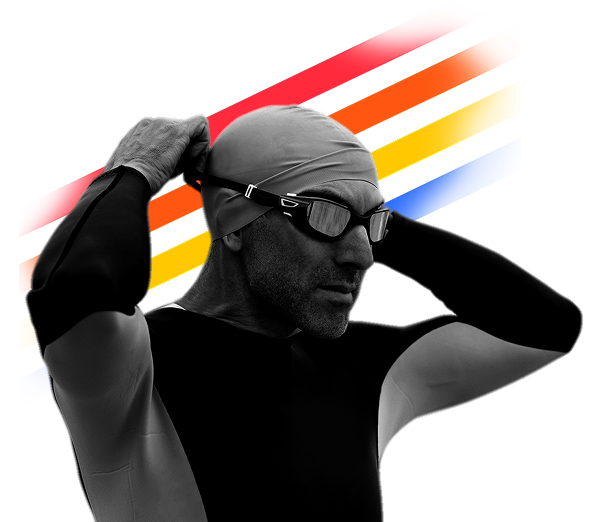
Sports events are undergoing a quiet yet profound transformation. It is not about new competition formats or more sophisticated technologies, but something more essential: who participates and how they experience the event..
New generations — primarily Generation Z and the younger athletes coming behind them — are redefining what it means to compete. For them, the event does not begin with the starting gun or end at the finish line. It is a process, a story, and a shared experience.
In sports such as open water swimming, triathlon, Oceanman, and cycling, this shift is especially evident.
From Event as Spectacle to Event as Personal Experience
For decades, sports events were designed to be watched: large stages, official times, rankings, and award ceremonies. Today, young athletes are looking for something different.
They want to feel that the event:
- Has a clear identity.
- Represents a lifestyle they identify with.
- Allows them to tell their own story.
Competition remains important, but it is no longer the only driving force. The lived experience, the setting, the community, and personal narrative become central. A triathlon is not just swimming, cycling, and running; it is preparation, travel, shared moments, and personal growth.
Athletes Who Are Also Storytellers
One of the most visible transformations is that participants are no longer just competitors — they are content creators..
With a mobile phone, athletes document training sessions, courses, fears, achievements, and setbacks. They share real processes, not just results. This content creates connection because it is relatable, honest, and human.
For events, this represents a huge opportunity:
- Reach no longer depends solely on official promotion.
- Each athlete becomes a communication channel.
- Authenticity outperforms traditional advertising.
Designing events that facilitate this storytelling — from physical spaces to access points and scheduling — is now part of sports marketing strategy.
Community Over Audience
New generations are not just looking for well-organized events; they are looking to belong.The idea of community outweighs that of audience.
In endurance disciplines, this logic feels natural:
- Athletes support one another.
- They share information and experiences.
- They recognize themselves as part of something bigger than a single race.
Event management platforms play a key role here: connecting people, enabling interaction, and extending the experience beyond race day. The event becomes a meeting point, not an isolated product.
Purpose, Environment, and Well-Being as Core Values
Young athletes deeply value the impact events have on their environment and on their own holistic well-being. They do not compete only to win, but to feel good about themselves and about the context in which they participate.
In open water and cycling events, the connection with nature is decisive. Alignment between message and action — environmental care, inclusion, accessibility — is closely observed. It is not a detail; it is a decision-making factor.
An event without a clear purpose will struggle to connect with these generations.
Technology in Service of the Experience — Not the Other Way Around
New generations expect seamless digital solutions, but they do not want technology to overshadow the sporting experience. Registration, communication, results, and tracking must be simple, intuitive, and human.
Technology does not replace the experience; it supports it. When it works well, it becomes invisible and allows the athlete to focus on what truly matters: competing, enjoying, and connecting.
The Future of Sports Events Is Already Underway
Organizers and platforms that understand this shift will stop thinking only about logistics and begin designing complete experiences. Those who do not risk falling behind.
Organizers and platforms that understand this shift will stop thinking only about logistics and begin designing complete experiences.Those who do not risk falling behind.
In endurance sports, where personal stories matter as much as results, this change is not only inevitable — it is an opportunity to build events that are more human, more connected, and more memorable.